
Common Food Groups and Their Nutritional Value
Understanding what different foods provide and why variety matters for balanced nutrition
Introduction to Food Groups
Foods are typically organised into groups based on their nutritional composition. Understanding these groups helps explain why eating from all categories supports comprehensive nutrient intake. Each group provides different nutrients essential for various bodily functions.
Vegetables
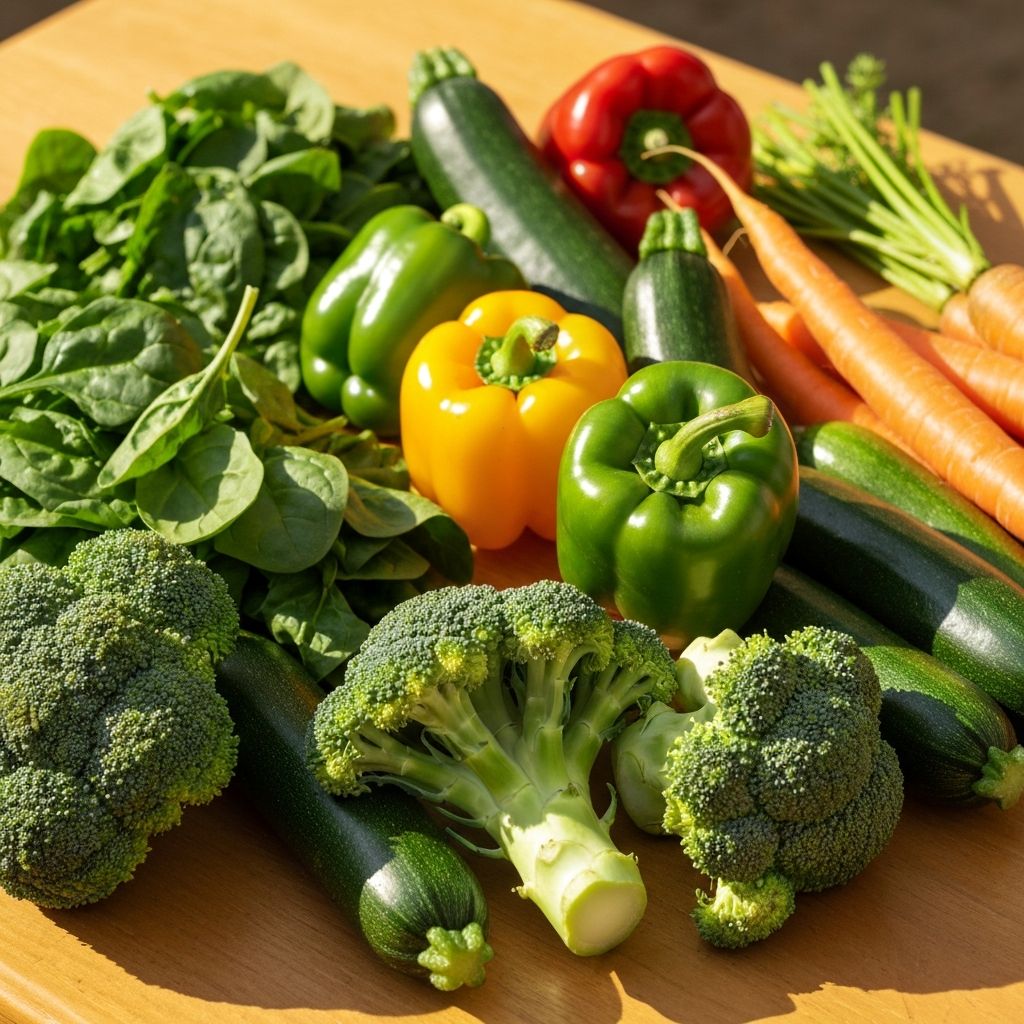
Vegetables are rich in vitamins, minerals, dietary fibre, and phytochemicals. Different coloured vegetables provide different nutrients:
- Dark Leafy Greens (spinach, kale): High in iron, calcium, vitamins K and A, and folate
- Orange and Red Vegetables (carrots, tomatoes, peppers): Rich in beta-carotene (vitamin A), vitamin C, and antioxidants
- Cruciferous Vegetables (broccoli, cauliflower, Brussels sprouts): Contain sulforaphane and other compounds with potential health benefits
- Legume Vegetables (peas, beans): High in protein, fibre, and minerals
Eating a variety of different coloured vegetables ensures a diverse nutrient intake throughout the day.
Fruits
Fruits provide vitamins, minerals, fibre, and natural sugars that support energy and various metabolic processes:
- Citrus Fruits (oranges, lemons, grapefruit): High in vitamin C and folate, which support immune function and cell health
- Berries (blueberries, strawberries, raspberries): Rich in antioxidants and fibre
- Tropical Fruits (bananas, mangoes): Provide potassium, vitamin C, and natural carbohydrates
- Apples and Pears: Good sources of fibre and various vitamins
The fibre in fruits supports digestive health and helps maintain stable energy levels.
Grains and Cereals

Grains provide carbohydrates for energy and contain B vitamins, minerals, and fibre (especially whole grains):
- Whole Grains (brown rice, oats, whole wheat): Retain the entire grain including the bran and germ, providing more fibre and nutrients than refined grains
- Refined Grains (white rice, white bread): Have been processed to remove the bran and germ, resulting in smoother texture but fewer nutrients and less fibre
- Pseudocereals (quinoa, buckwheat): Seed-based grains that are complete proteins containing all essential amino acids
Whole grains provide sustained energy and support digestive health through their fibre content.
Proteins
Protein sources provide amino acids needed for muscle maintenance, immune function, and countless other bodily processes:
- Meat and Poultry: Complete proteins containing all essential amino acids, plus iron and B vitamins
- Fish and Seafood: Provide protein, omega-3 fatty acids, and minerals like selenium and iodine
- Legumes (beans, lentils, chickpeas): Plant-based proteins high in fibre and minerals; when combined with grains, provide complete protein profiles
- Nuts and Seeds: Provide protein, healthy fats, fibre, and minerals
- Dairy and Alternatives: Provide protein and calcium; dairy contains natural lactose and fortified alternatives may contain added nutrients
Variety in protein sources ensures diverse amino acid and nutrient intake.
Dairy and Alternatives
These foods provide calcium, protein, and other nutrients important for bone and muscle health:
- Milk: Contains natural lactose, protein, calcium, and various vitamins
- Cheese: Concentrated source of protein and calcium; higher in fat than milk
- Yoghurt: Contains protein, calcium, and beneficial bacteria (probiotics) depending on preparation
- Plant-based Alternatives (soy, oat, almond milk): Vary in nutrient content; many are fortified with calcium and other nutrients
Healthy Fats
Dietary fats are essential for hormone production, nutrient absorption, and brain function:
- Unsaturated Fats (olive oil, avocados, nuts): Support cardiovascular health and nutrient absorption
- Omega-3 Fatty Acids (fatty fish, flaxseeds, walnuts): Support brain health and reduce inflammation
- Saturated Fats (present in dairy, coconut): Present in various foods; moderation is recommended
Why Variety Matters
Eating from all food groups ensures comprehensive nutrient intake because:
- Different foods provide different combinations of vitamins, minerals, and phytonutrients
- Some nutrients are better absorbed in combination with others
- Food provides both isolated nutrients and beneficial compounds not yet fully understood
- Individual nutrient needs vary, and variety provides flexibility
Practical Application
Balanced daily eating typically includes foods from multiple groups: vegetables and fruits for vitamins and fibre, grains for energy and B vitamins, proteins for amino acids and various nutrients, and healthy fats for hormone production and nutrient absorption. The specific proportions and quantities vary based on individual needs, preferences, and health situations.
Important Considerations
This article explains food groups and their nutrients as educational information. It is not a prescription for how much of each group you should eat. Individual nutritional needs vary based on age, health status, activity level, and other factors. For personalised dietary guidance, please consult with a registered dietitian or qualified healthcare professional.
Explore More
Return to the blog to read other articles about nutrition science and daily eating.